
Research Day showcases how functional materials shape a better future
On the surface, the posters lining the walls of Benson 410 at Wake Forest’s third annual Center for Functional Materials (CFM) Research Day looked like the typical trappings of an academic showcase: charts, microscopy images, material diagrams, lines of data. But a closer look revealed something deeper. These projects—ranging from nanomaterials for cancer detection to thin-film technologies for improved solar cells—represent the quiet engines of innovation that shape how we communicate, generate energy, heal, and live.
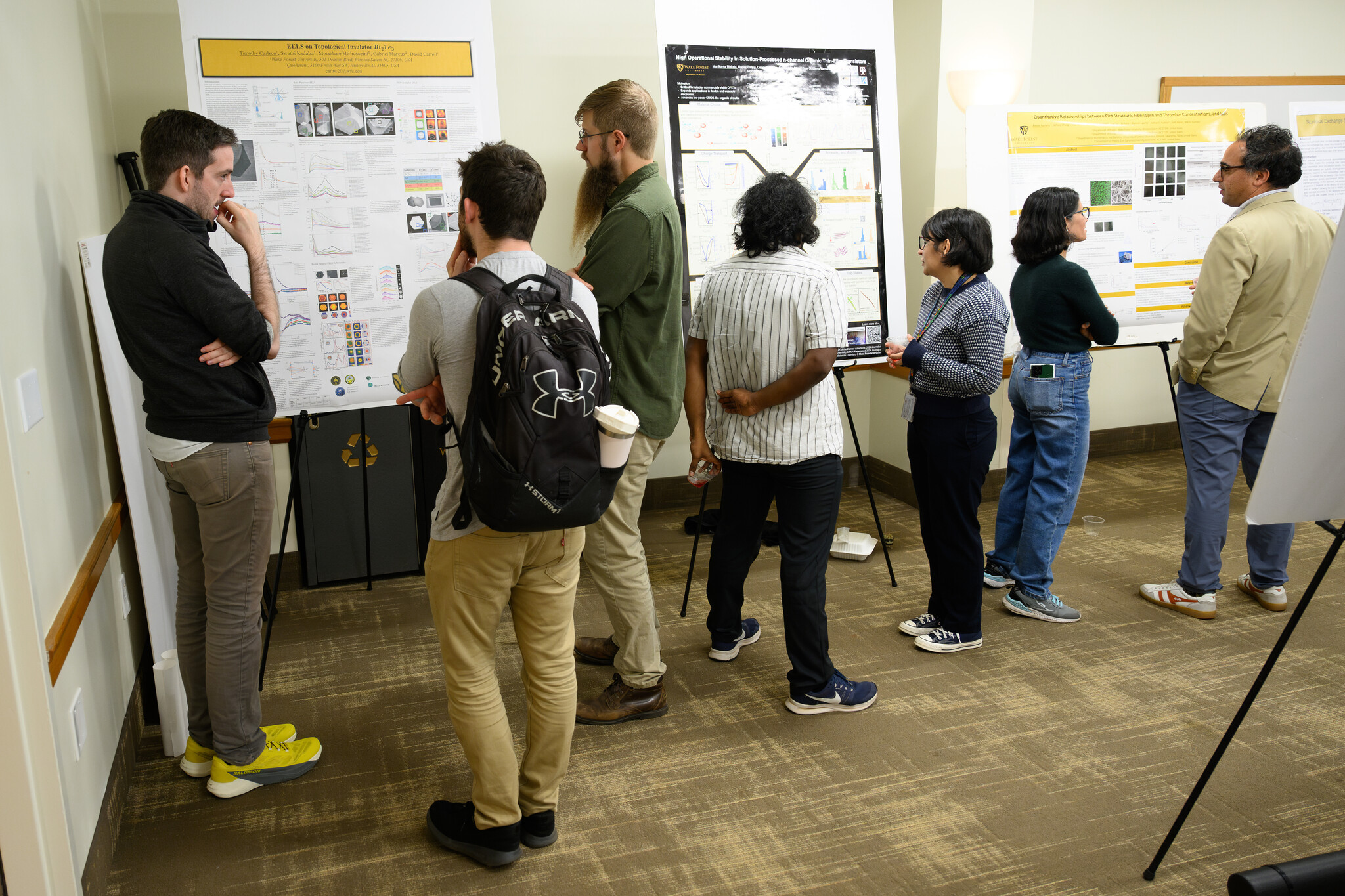
Functional materials are the building blocks of modern life. They are the invisible infrastructure behind everything from medical devices to wearable sensors, from energy storage systems to environmental monitoring tools. At Wake Forest University’s third annual Center for Functional Materials (CFM) Research Day, the depth and breadth of this work came into view, revealing a dynamic research ecosystem with the power to confront some of society’s most pressing challenges.
“Functional materials are the foundation of all modern technologies,” said Timo Thonhauser, Director of the Center for Functional Materials and professor of physics. “They are the reason our devices work, our medical tools are safer, and our energy systems are becoming more sustainable. The research happening in the Center for Functional Materials shapes the invisible infrastructure of our world.”
Thonhauser emphasized the center’s collaborative strength. “What makes the Center special is that we bring together people who would not otherwise meet—physicists, chemists, engineers, medical researchers—and together they create solutions that have a real chance to improve society. That is the power of this community.”
A day designed to catalyze connection
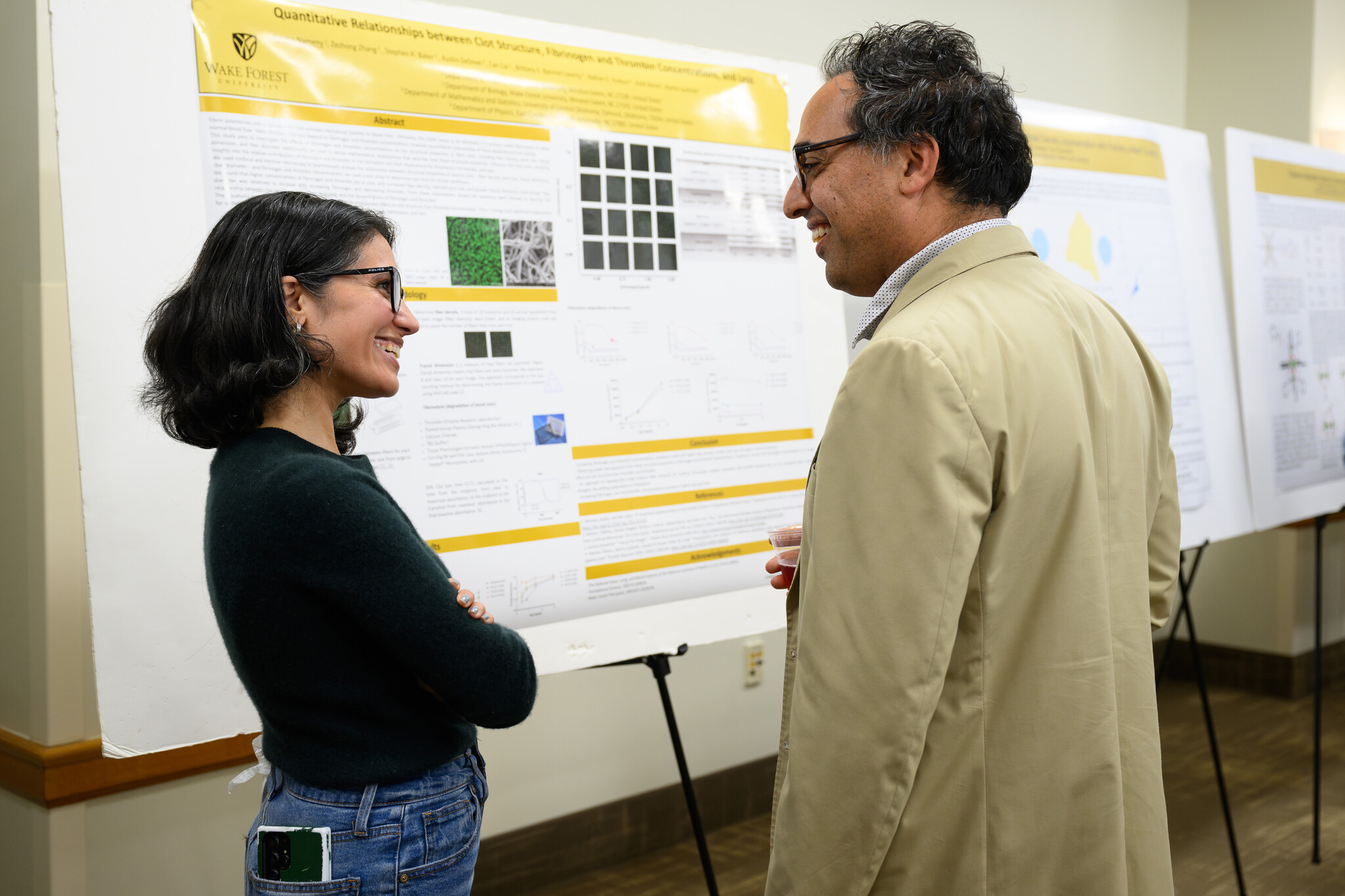
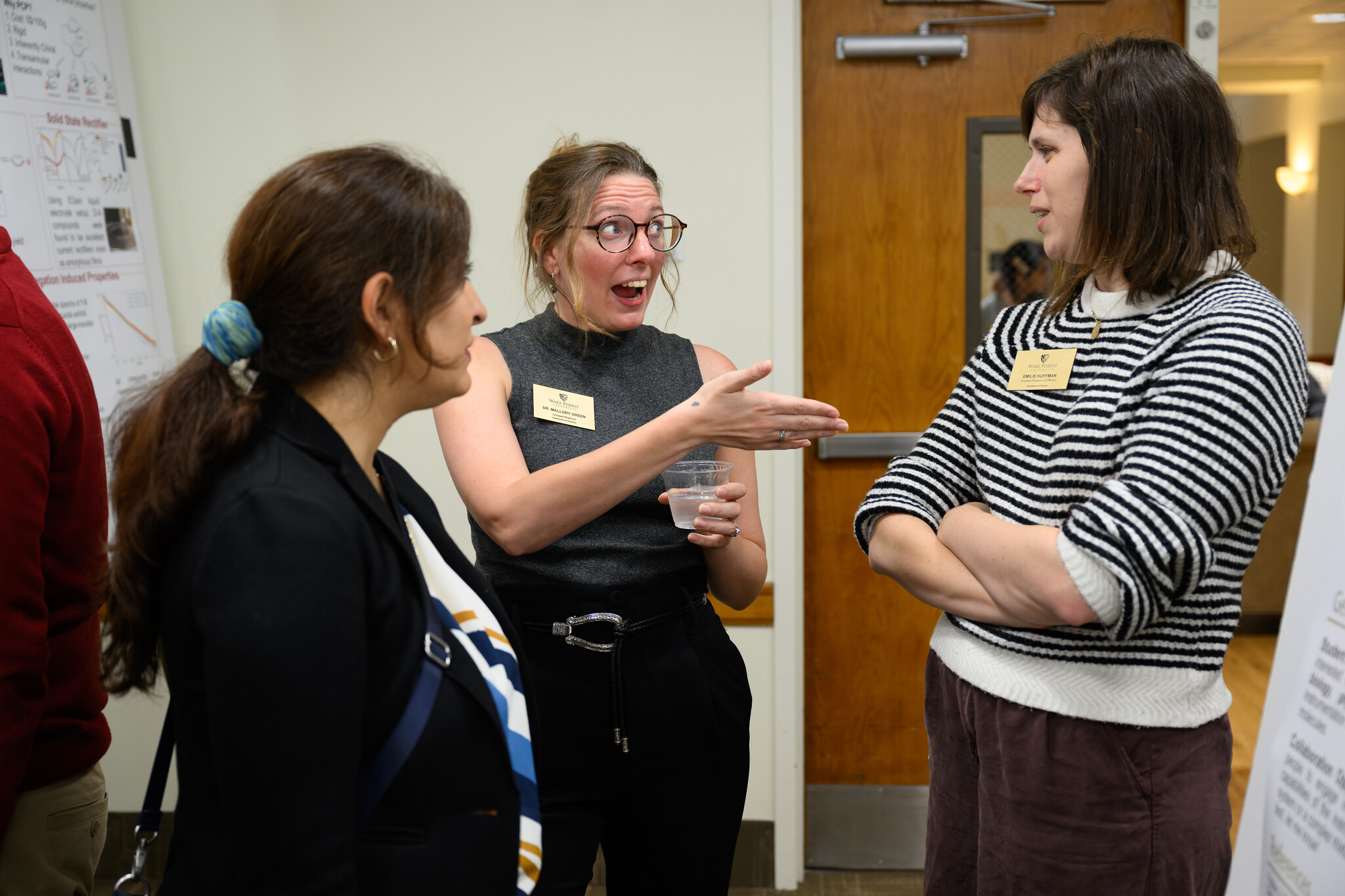
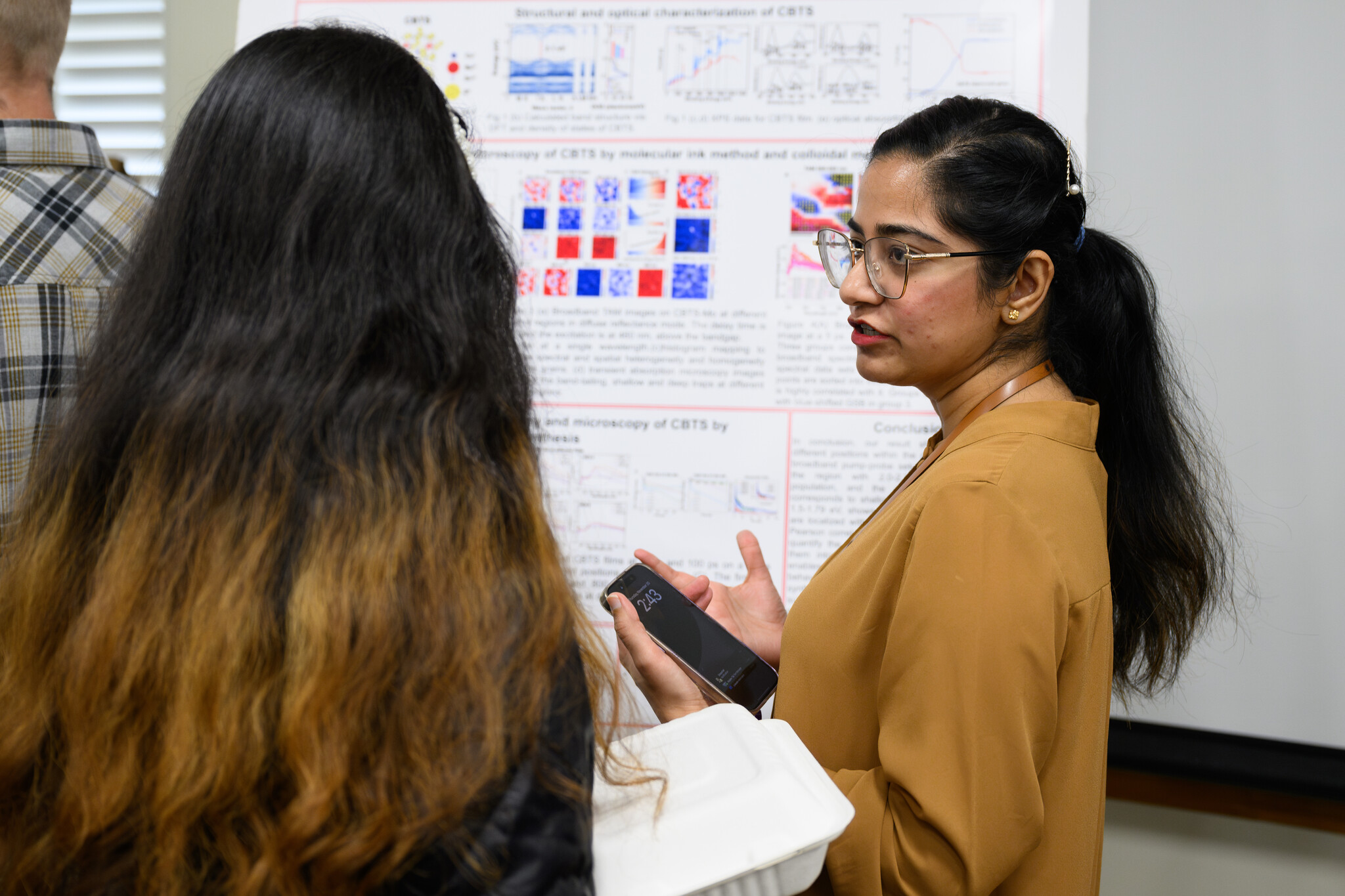
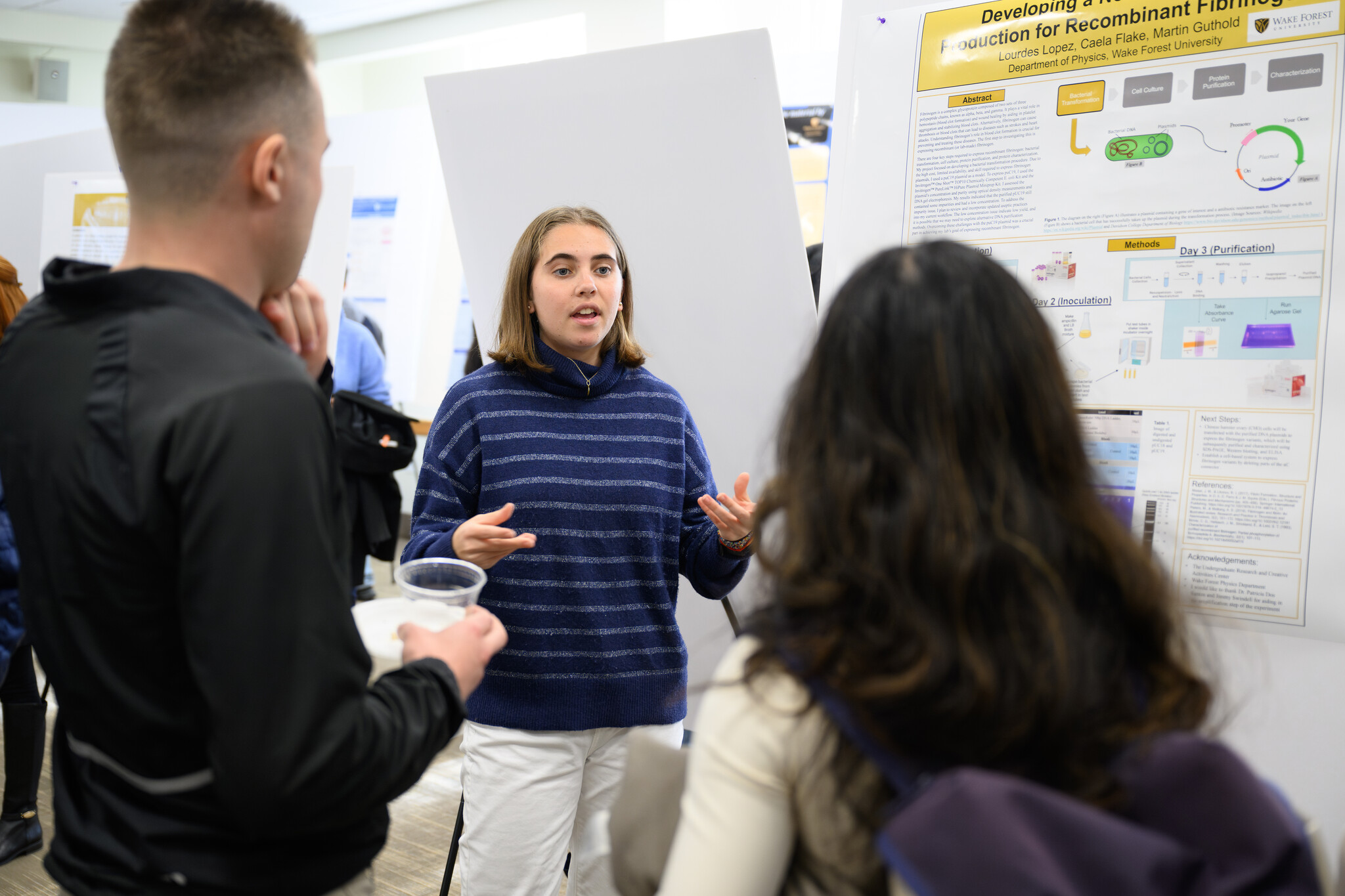
Research Day is more than a showcase. It is a gathering place that brings together faculty, graduate students, undergraduates and School of Medicine researchers who rarely occupy the same room at the same time. For a few hours, conversations unfolded across disciplines: a physicist leaning in to ask about polymer elasticity in wearable electronics, a chemist exploring the biomedical implications of gold nanoparticles, an engineer comparing computational simulations with experimental thin-film growth.
These moments are the heart of the event. They spark ideas, seed collaborations, and strengthen the community of scholars who are collectively expanding the field of functional materials. They also serve as an invaluable training ground for students, who practice the art of distilling complex work into accessible language and responding to questions from experts outside their field.
“Research Day shows our students what it means to be part of a scientific community. They learn to explain their work clearly, to ask good questions, and to see how their contribution fits into a bigger picture. Watching an undergraduate talk confidently both with a medical school researcher and a physicist or chemist is exactly why we created the Center—so students can grow through real collaboration and discover their place in the scientific world,” said Oana Jurchescu, Baker Professor of Physics and a CFM member.
Energy in the room: Curiosity, collaboration, and discovery
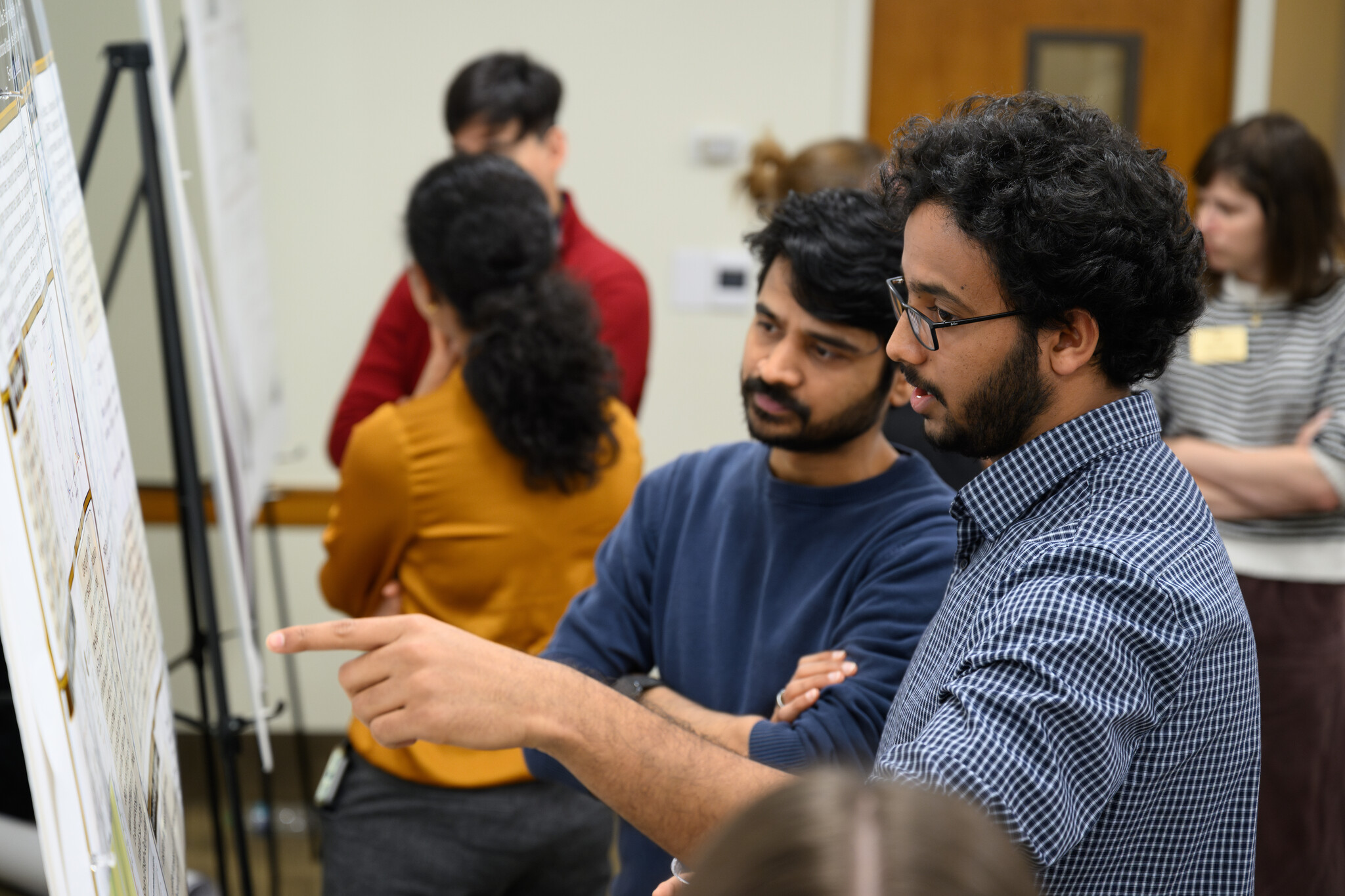
Clusters of attendees formed naturally around the posters, with conversations shifting fluidly between technical questions and big-picture implications. The range of work on display was striking. At one poster, a student explained how modifying gold nanoparticle geometry could improve targeted cancer imaging. Across the room, an engineering team described stretchable conductive polymers that might someday enable more comfortable, reliable health-monitoring wearables. Down the row, a researcher showcased computational modeling designed to predict the behavior of new materials before they are ever synthesized in the lab.
Each project demonstrated the same underlying principle: functional materials are not abstract science. They are the foundation for technologies that touch people’s daily lives.
Research with real-world impact
The work is technical and complex, and also critically important to society in several key areas:
Improving health and medical care
Projects focused on:
- safer tools for radiation detection and control,
- nanoparticles that help detect and treat cancer more precisely,
- hydrogels and polymer films intended to interact safely and effectively with biological systems.
- materials engineered to improve drug delivery through balloons and stents, allowing medications to be released more precisely and effectively at the site where they are needed.
These innovations point toward earlier diagnoses, safer treatments, and medical technologies that adapt to the human body.
Advancing clean energy and environmental solutions
Several teams showcased work that supports more sustainable futures:
- next-generation solar materials that capture energy more efficiently,
- materials for flexible, rollable and bendable electronics
- thin films and semiconductor structures designed to reduce energy consumption,
- models that predict how these materials behave under extreme environmental conditions.
Together, they represent steps toward technologies that can help communities navigate rising temperatures, volatile weather patterns, and growing demand for renewable energy.
Building the technologies of tomorrow
Other posters focused on:
- sensors that respond to UV light,
- ultra-thin transistors for advanced electronics,
- novel nanostructures that may eventually enable new computing capabilities.
These efforts pave the way for devices that are faster, smarter, more flexible, and more responsive to human needs.
Enhancing everyday life
Wearable materials, adaptable coatings, and stretchable electronics hinted at a future with technology that is both more intuitive and more seamlessly integrated into daily living.
Interdisciplinary strength as a signature of CFM
The Center for Functional Materials is defined by a deeply collaborative research culture, one that encourages shared inquiry across disciplines. The event made visible what CFM leaders describe as “homogeneous interactions across the Center,” a space where no one works in disciplinary isolation. Posters created by co-advised students, joint projects spanning Reynolda Campus, the School of Medicine and partner institutions, and conversations that leapt effortlessly from chemistry to engineering to medical physics all reinforced this culture of integration.
Looking ahead: A future built on smart, sustainable, human-centered materials
As the final conversations settled and posters were carefully taken down, one theme lingered: momentum. The projects on display, even in their early stages, signal a trajectory toward materials that are smarter, more sustainable, and more responsive to human needs. They reflect a university where mentorship and discovery go hand in hand, and where students contribute meaningfully to work with the potential to improve lives.
Research Day affirmed that Wake Forest is not simply studying functional materials; it is helping shape the future they make possible. The next breakthrough may begin with a conversation that happened here.
Categories: Research & Discovery