
Chemistry Professor John Lukesh’s redesigned lab expands undergraduate research possibilities
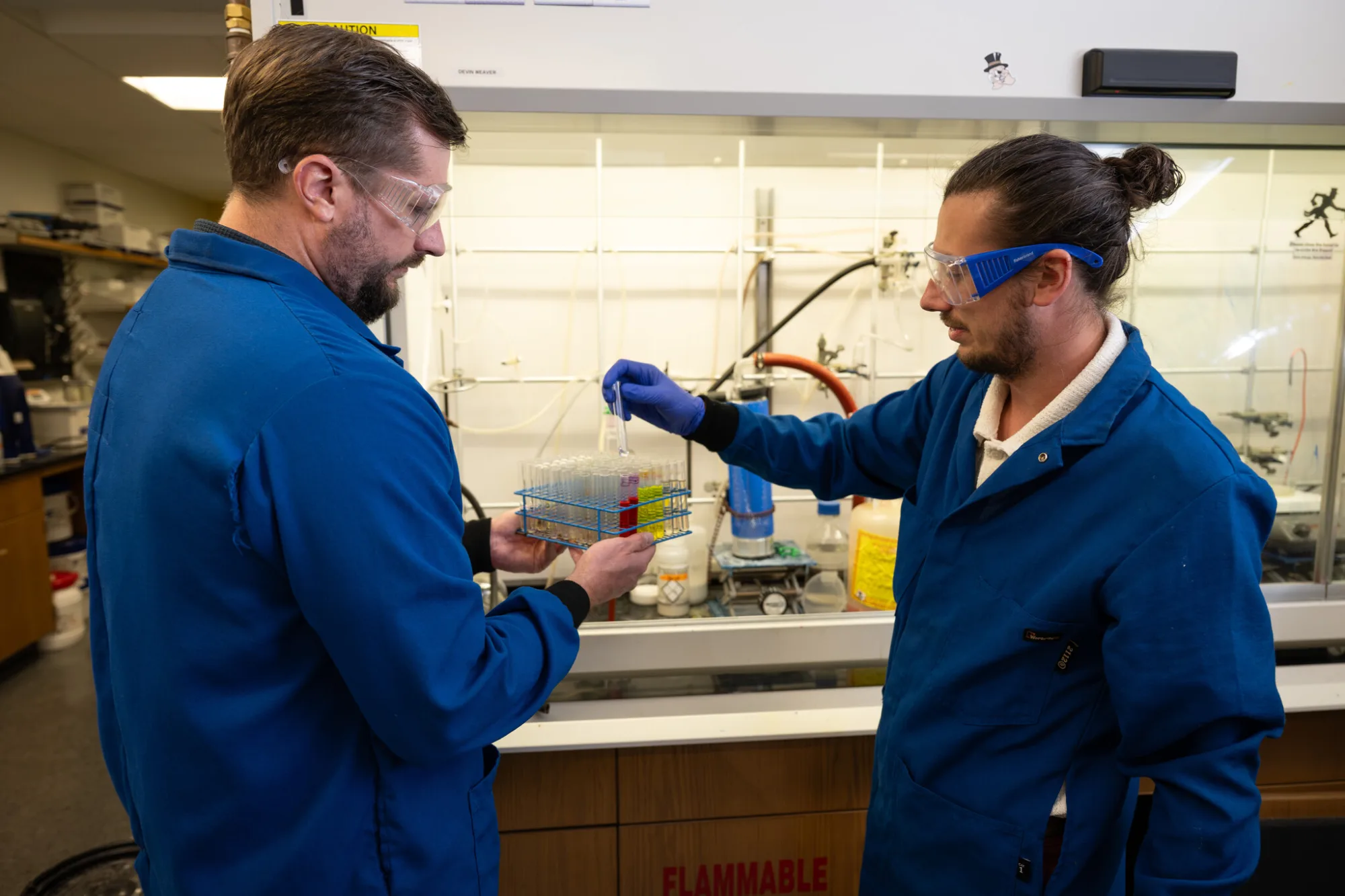
John Lukesh, associate professor and director of Graduate Studies in the Department of Chemistry, set out to create a course that would allow all of his students to benefit from a hands-on research experience. He and Graduate Assistant Devin Weaver (PhD ’27) developed a course-based undergraduate research experience (CURE).
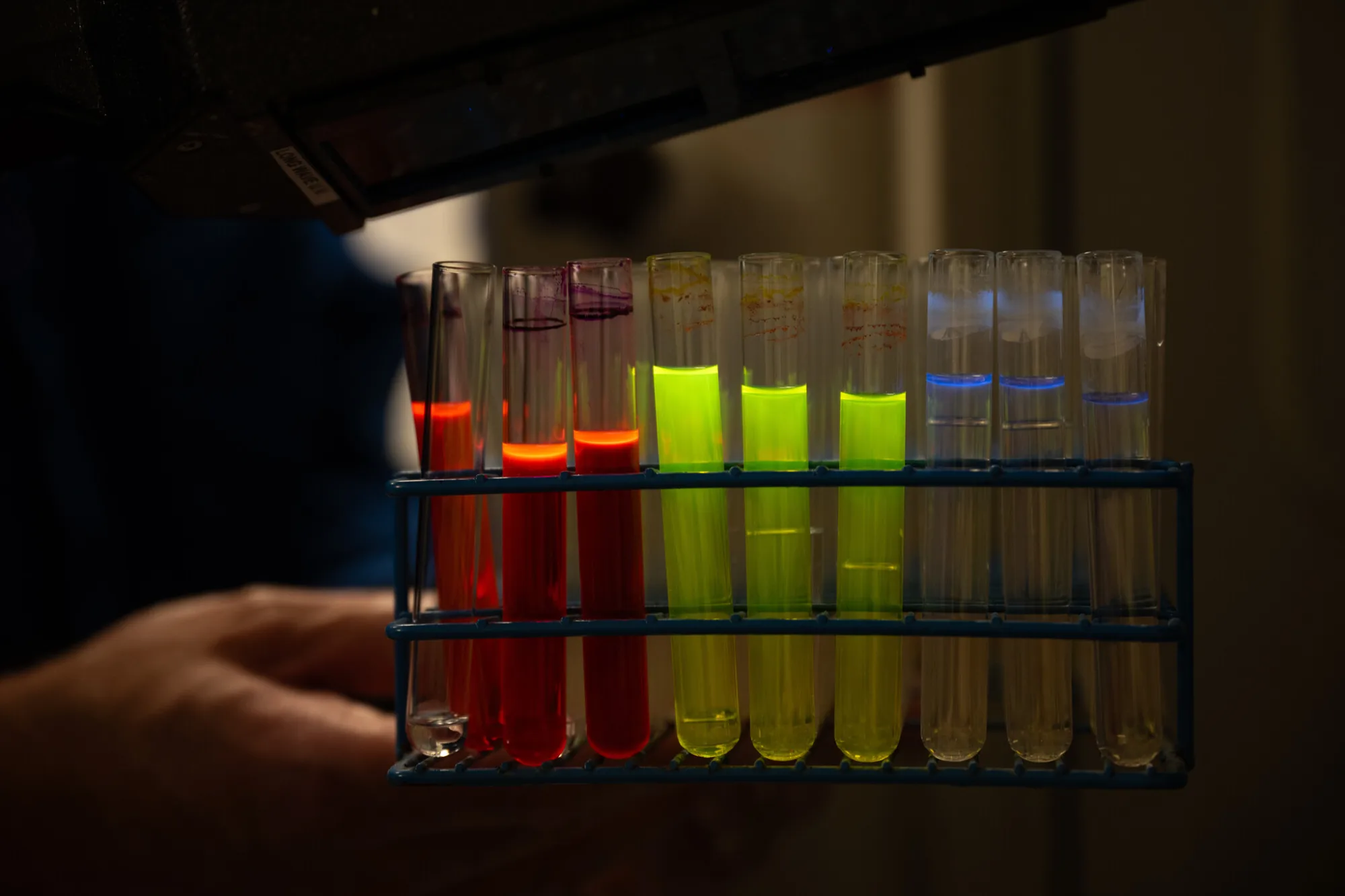
The six-week, research-inspired laboratory module is part of the undergraduate Chemistry major with a concentration in Medicinal Chemistry and Drug Discovery. The course was developed to give students hands-on experience with the multidisciplinary work involved in modern medicinal chemistry, including organic synthesis, analytical chemistry, data analysis and biological applications.
Lukesh, who joined Wake Forest in 2017 to help develop the medicinal chemistry and drug discovery program, wanted to incorporate a CURE to allow more students to engage in research. With roughly 16 to 22 students typically enrolled in the academic program and only a limited number of faculty research positions available, the course-based model offers a way to provide every student with meaningful research experience.
Unlike traditional laboratory exercises, where students follow a prescribed procedure and know what outcome to expect, the new model asks students to work through a multistep research project. Students conduct research overseen by Weaver and ultimately write an American Chemical Society-style manuscript explaining the scientific problem, their approach and their findings.
“It’s well documented that CUREs provide many advantages over typical cookbook-style labs,” said Lukesh. “CUREs result in higher learning gains for students, increase retention in STEM, build confidence in performing research, and increase students’ likelihood of pursuing research in a STEM-related field.”
For Weaver, who helped refine the module while serving as Lukesh’s teaching assistant, one of the most valuable aspects is the uncertainty built into the experience. Rather than knowing in advance that an experiment will work, Weaver and the students investigate together and learn from the results.
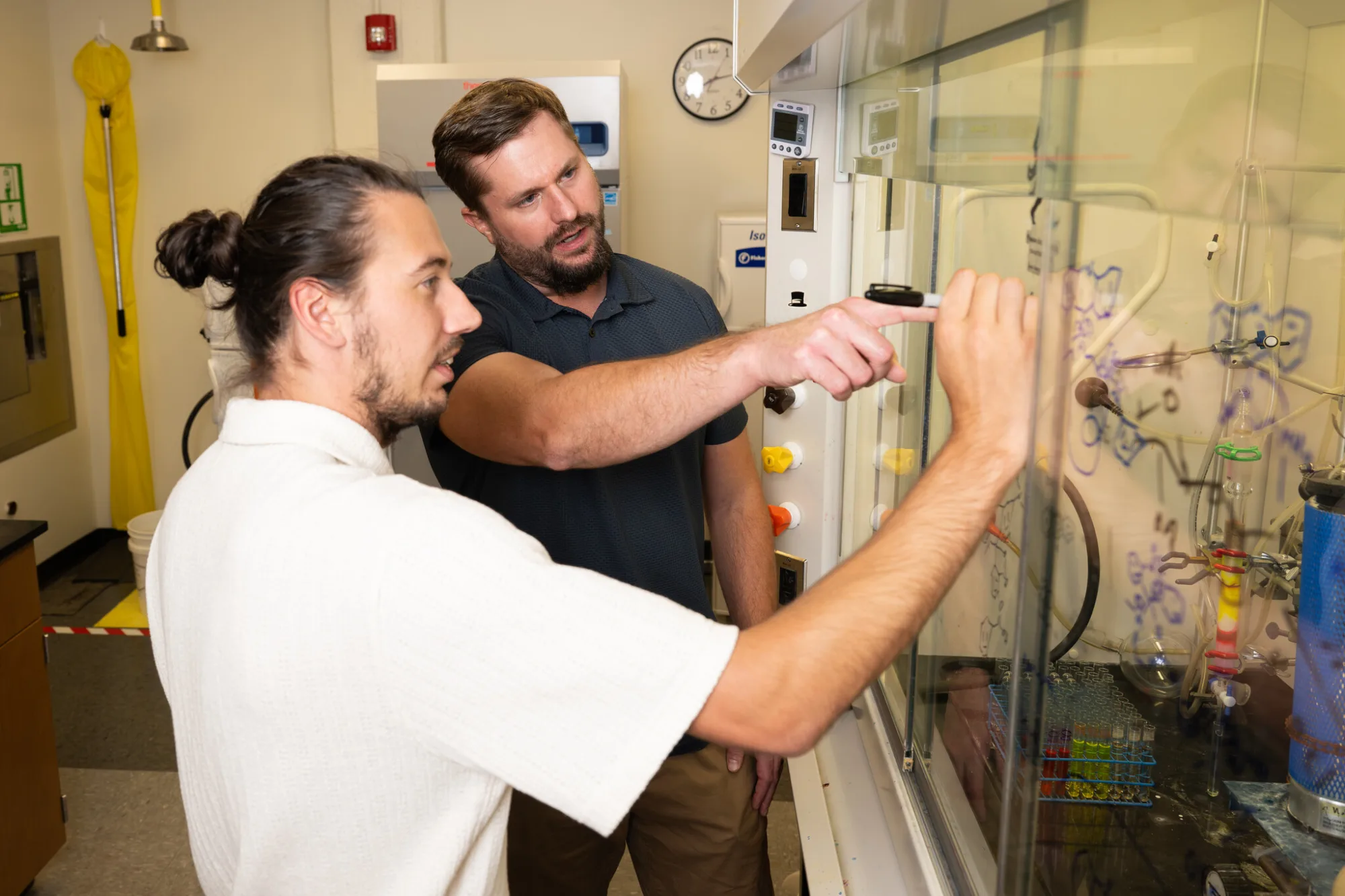
“I’m learning with them as we go,” said Weaver. “We’re really troubleshooting, which has a real research feel. I set up a reaction and don’t know if it works. We figure out together.”
The balance between authentic research and a structured classroom experience is intentional. The project is not completely open-ended, as students need a reasonable assurance that they can synthesize the compounds and generate meaningful data within a four-hour weekly laboratory period. But the work still asks students to think and problem-solve like researchers.
The model took several semesters to refine. Initially, only one or two student groups were able to generate meaningful data. By the third semester, every group was producing successful results, demonstrating the approach’s reproducibility. Lukesh credits Weaver’s passion for undergraduate education and educational scholarship as instrumental in refining and implementing the lab model.
Lukesh and Weaver, along with Danielle Simon (’26), recently published an article about the model in the Journal of Chemical Education. Simon, currently a first-year medical student at Philadelphia College of Osteopathic Medicine, said “This lab improved my critical thinking and allowed me to see the connection between the classroom and the laboratory.”
Lukesh plans to continue exploring opportunities to bring more real research experiences to undergraduate students. He hopes the model can eventually serve as an example for redesigning lower-level chemistry labs, giving students research experiences even earlier in their coursework.
Categories: Experiential Learning, Research & Discovery